

An illustration of a gunman shooting from inside the car. This is not the original picture of what transpired.
Following the attempted murder of the principal at a special school in King William's Town, Eastern Cape, the school's acting principal has been carrying the weight of three jobs for months while the principal remains traumatised and fearful for his safety.
It is understood that an unknown gunman fired shots at Ngangelizwe Siphenkosi, the principal at St Thomas Special School, while leaving the school premises on 22 February 2025.
Eastern Cape Department of Education spokesperson Mali Mtima explained that Siphenkosi fears for his life and has therefore refused to return to school unless his safety can be guaranteed.
Since the incident, his deputy, Sithembele Mbinda, has been serving as acting principal in addition to his responsibilities as a Grade 12 English FAL educator and deputy principal.
This has left Mbinda overwhelmed and stressed, according to the Deaf Federation of South Africa (DeafSA). Therefore, he has called for the intervention of DeafSA and the South African Democratic Teachers Union (SADTU).
According to DeafSA, Mbinda, the deputy principal, is not remunerated for his role as acting principal. But Mtima said the position is voluntary because Siphenkosi has not relinquished his post.
Eastern Cape police Captain Mluleki Mbi confirmed that a case of attempted murder was opened at SAPS Izele on 22 February 2025.
Mbi said:
“According to the report, it is alleged that a man in his 30s was driving from St Thomas Special School outside Qonce [King William's Town] when he was approached by an unknown gunman who opened fire toward his vehicle. It is said that during this ordeal the driver managed to lie flat inside the vehicle. After a few minutes, he got up, and the gunman had fled the scene. He sustained no injuries.”
Siphenkosi declined to comment, stating that he does not want to relive the trauma. Mtima highlighted that the department offered him psycho-social support through its wellness services.
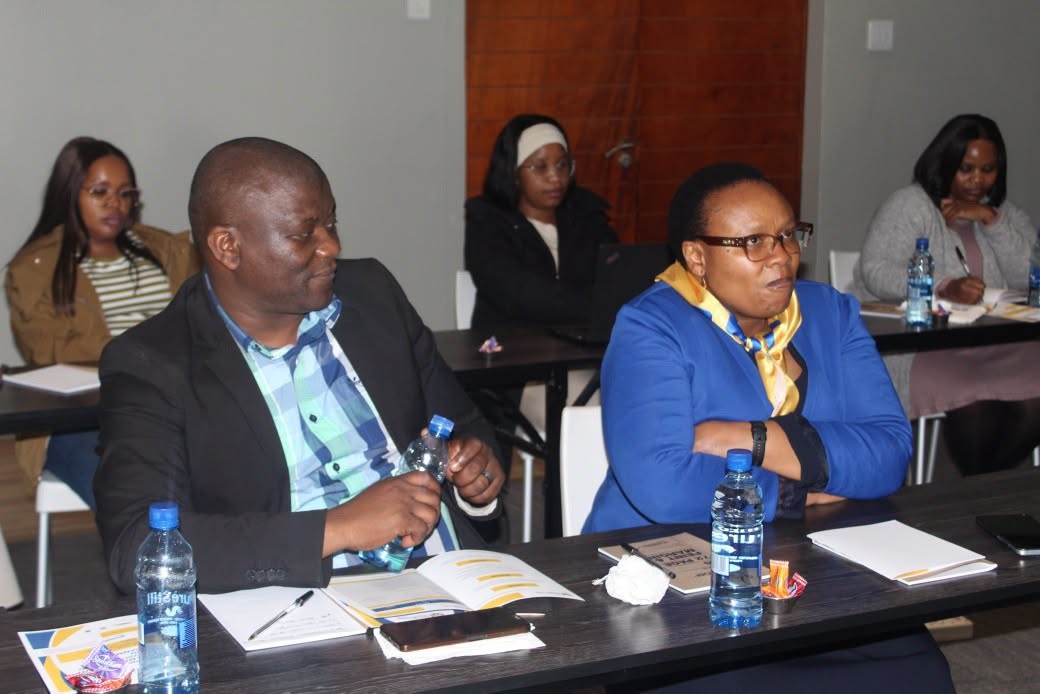
Eastern Cape Department of Education spokesperson (left) Mali Mtima says St Thomas Special School principal Ngangelizwe Siphenkosi has not returned to work because he fears for his life and will only do so once his safety can be guaranteed. Picture: Facebook
Mtima said:
"We further advised him to have sessions with the psychologist, which he did. We further engaged with the school, trying to prepare for his safe return, but he refused to return, raising safety concerns which, unfortunately, we couldn't guarantee."
"I think any human being who has gone through and survived such an experience would naturally fear for his life. However, he told us that he fears a recurrence of the incident, which may cost him his life. After the expiry of his leave, the principal was attached to another school, where he rendered services until the end of the year," Mtima said.
Mtima said that this year Siphenkosi reported to the Circuit Management Centre office and that the district has been engaged in various discussions concerning the matter and is in the process of placing him at another school.
DeafSA education director Ingrid Parkin said the situation had left Mbinda so stressed that he requested the organisation's swift intervention.
DeafSA's Education Director described the situation as inequitable and inconsistent with established policy.
In her letter to the Department
of Basic Education and the Eastern Cape Department of Education, Parkin wrote:
"For 16 months, he has carried the full leadership burden of the school without any remuneration in the form of an acting allowance or additional support. This situation is not only inequitable but also contrary to established policy."
Parkin informed the provincial and national department that, according to the Public Service Regulations, 2016 (Chapter 1, Part VII, Regulation 63) and the Personnel Administrative Measures (PAM), an employee formally appointed to act in a higher post for a period exceeding six weeks is entitled to an acting allowance, provided they perform the full duties of that post.
Parkin’s stressed that Mbinda's case clearly meets these criteria, yet no allowance has been paid.
She said when she raised this matter with an official from the provincial department, she was assured that the leadership situation would be resolved soon.
“However, 16 months have passed with no resolution, leaving the school in prolonged uncertainty and placing an unreasonable burden on Mr Mbinda. This extended period of acting without remuneration or clarity is excessive and unjust,” said Parkin.
Parkin said that urgent intervention is required to ensure that Mbinda receives the backdated acting allowance to which he is entitled under the PAM and Public Service Regulations.
SADTU spokesperson Nomusa Cembi said the union would take up the matter.
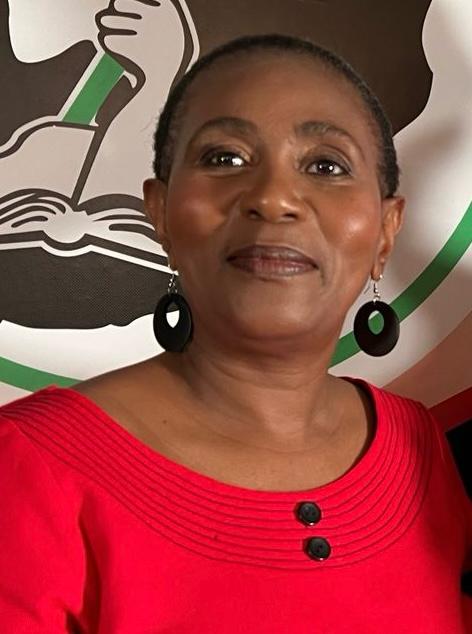
SADTU spokesperson Nomusa Cembi has urged the Department of Education to advertise vacant posts and appoint more staff to prevent teachers from being overworked. Picture: Supplied
Cembi said the union was deeply concerned that the employee had been working in an acting capacity for such a long time without compensation. She said SADTU had received numerous reports from different provinces of educators serving in acting positions without being paid and believed this was the result of austerity measures imposed by the department.
Cembi said:
“We believe this is due to the austerity measures that have been imposed in the department, resulting in many acting positions not being advertised and employees not being paid for acting across the provinces.”
Mtima said, “When the acting principal was appointed, he was given a letter appointing him on an acting basis without remuneration, and he accepted.”
Mtima said the acting appointment was unpaid because the department could not pay two employees for the same post simultaneously.
"Having accepted the acting responsibility, that didn't take away his teaching responsibility. He still has to teach the subjects allocated to him and execute administrative duties at the same time, which hinders him from being available for his classes regularly. As a department, we are also unable to appoint a substitute educator to assist him since the principal is not on leave."
Parkin urged the department to resolve the status of the substantive principal's post, either through redeployment or by formally declaring the position vacant.
Parkin said the department should:
"Provide the school with stable leadership to safeguard the quality of education and staff morale, which is being negatively impacted at an increasing rate."
Cembi said the austerity measures were negatively affecting teaching and learning, leading to overcrowded classrooms, excessive workloads and growing pressure on teachers. She said the union had repeatedly called on the government to properly fund education, fill vacant posts more quickly and compensate educators who were required to act in higher positions.
“This workload affects teachers' mental well-being and continues to pile up,” she said.
She said teachers were expected to “perform miracles” with the little support they received.
“Teachers have to perform miracles to achieve the good results that we see. Those results come at the cost of teachers' mental well-being. At the end of the day, if the results are poor, principals are quickly called to account. We call on the department to advertise posts and employ more people,” urged Cembi.
